
Human or machine? – The limits of interpreting in industrial realit
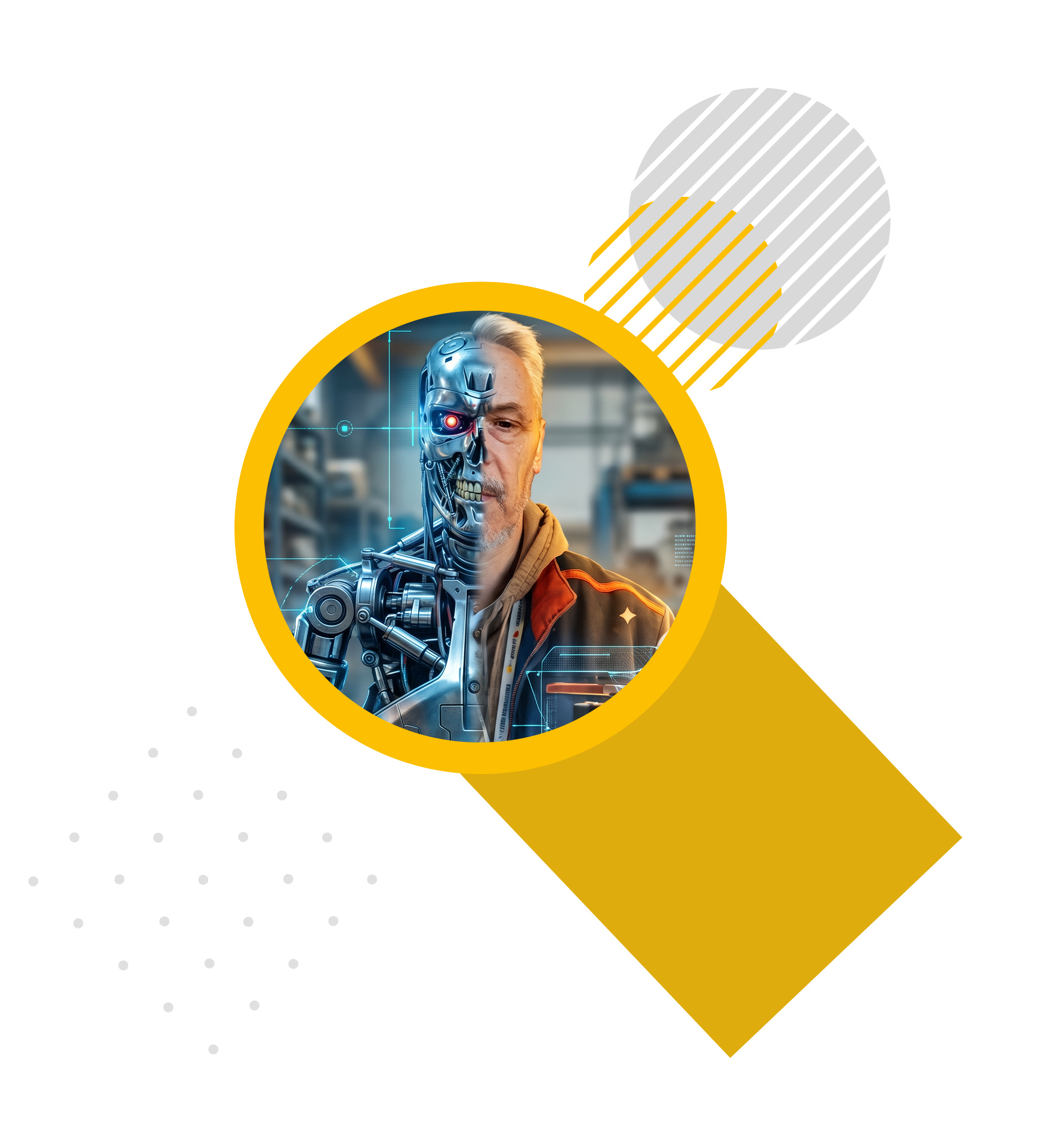
In modern industrial environments—such as during the assembly of a compressor—interpreting is not merely a linguistic task but a complex cognitive process. The attached image clearly illustrates the boundary between humans and machines: although artificial intelligence is becoming increasingly advanced, genuine “understanding” remains closely tied to human multimodal processing. The current limitation of interpreting software lies precisely in its inability to effectively integrate visual and auditory information into a unified network of meaning.
Compressor assembly is a typical example of a task in which communication is highly context-dependent. When an engineer says, “this valve must be connected here, but only if the pressure switch has already been calibrated,” the meanings of “this” and “here” can only be interpreted within the visual space. A human interpreter automatically links the spoken instruction with the visible objects, identifies the components, and takes into account the current stage of the assembly process. This capability is known as multimodal integration, one of the fundamental functions of the human brain.
By contrast, most interpreting software—even systems based on advanced neural networks—is primarily optimized for text or speech processing. Although image-recognition and speech-recognition models do exist, they often operate as separate systems, lacking a deep, context-sensitive connection between them. The issue is not merely technological but representational in nature: the machine does not truly “understand” the role a particular visual element plays within a process or how it relates to spoken instructions.
From a scientific perspective, this issue is linked to the problem of semantic grounding. This means that the meaning of linguistic elements becomes complete only when they are connected to real physical or visual references. For humans, terms such as pipe, valve, or compressor housing are not merely words but concrete objects with functions, locations, and states. For software, however, these are often nothing more than abstract tokens.
The situation is further complicated by temporality and process orientation. Compressor assembly is not a static condition but a sequence of steps in which individual operations build upon one another. A human interpreter can follow this dynamic process, anticipate subsequent steps, and interpret communication accordingly. Current software systems, however, generally process information sentence by sentence, without constructing a deeper model of the overall process.
In summary, the limitation of interpreting software does not lie in the accuracy of linguistic processing but in the absence of multimodal understanding grounded in the real world. Until machines become capable of integrating visual and auditory information into a unified, context-sensitive representation, the role of the human interpreter will remain indispensable in complex industrial environments such as compressor assembly.
If you need industrial interpreting, get in touch with us and we’ll help you find the best solution.